
"Export volume"
700 article(s) found
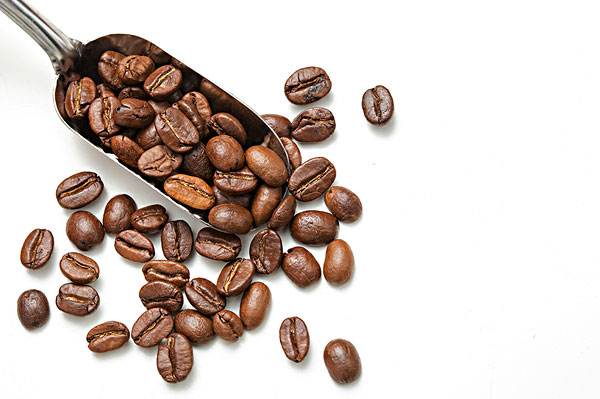
Latin American coffee growing region, Latin American coffee taste
Following Cafe Review (Wechat official account vdailycom) found that Beautiful Cafe opened a small shop of its own Latin America is famous for its coffee production and export volume, ranking first in the world. In 1979, Latin America produced 3.264 million tons of coffee, accounting for 65.6 percent of the world's total output, and coffee exports accounted for 2.217 million tons, accounting for about the world's total exports.

Recommendation of boutique coffee manor; detailed analysis and introduction of coffee beans in Ethiopia (mocha)
Ethiopia's coffee exports account for about 3% of the world market and are the world's eighth largest coffee exporter. Coffee exports increased steadily from 58000 tons in 1990-91 to 110000 tons in 1995-96 and remained at this level in the following years. The export volume exceeded 110000 tons in 2001-2002 and reached 127000 in 2002-2003.

Nicaraguan coffee exports have exceeded 400 million US dollars this harvest year.
For professional baristas, please follow the coffee workshop (official Wechat account cafe_style). According to official statistics, in the first 10 months of this (2016-2017) harvest year, Nicaraguan coffee exports grew by 21.6% in total value and 17.8% in volume. According to the Nicaraguan Export Exchange Center (Cetrex), coffee was exported from Nicaragua from October 1 last year to July 31 this year.

Coffee flavor-Galapagos Coffee region Santa Cruz Island
Ecuador began to grow coffee in the 19th century and was one of the world's major coffee producers in the early 20th century. Ecuadorian coffee has about 60% Arabica species and 40% Robbins species. Ecuador's coffee production has been declining over the past decade, and now there are only about 700000 bags. And the export volume is also very low, because

Annual report of Honduran Coffee 2017
Highlight of the report: Honduras is the largest coffee producer in Central America and the third largest coffee producer in Latin America, ranking sixth in global coffee exports. Coffee production in Honduras from October 2017 to September 2018 is expected to reach 6.5 million bags, up 4 per cent from last year. For the 2016 / 2017 sales year, at the beginning of 2017, Loeb

An introduction to the market price analysis of the reasons affecting the price change of coffee beans
Market price analysis introduces seasonal factors: winter in the northern hemisphere is the biggest consumption season for coffee beans, which will lead to a surge in prices due to the inequality between supply and demand. In addition, since Brazil has a coffee harvest period from April to August, if any large-scale seasonal climate damage occurs during this period or at other times, it will easily lead to a surge in coffee bean prices. Pass

Coffee bean information Kenyan coffee export earnings increased by 17% from 2013 to 2014
As a result of higher production and higher prices, Kenyan coffee exports increased by 17 per cent to US $254 million from October 2013 to September 2014, and exports increased by 25 per cent to 49500 tons. Kennon benefited from a drought in Brazil, the world's largest coffee producer, last year, which led to a rise in global coffee prices. The export market of Ken coffee is also gradually expanding, in addition to the traditional European and American markets.

The export price of Nicaraguan coffee is growing high.
For the exchange of professional baristas, please follow the coffee workshop (Wechat official account cafe_style). According to the Nicaraguan Export Exchange Center (Cetrex) statistics, in the current harvest year (October 1, 2016 to September 30, 2017), Nepalese coffee exports exceeded 2.8 million piculs by the end of August, an increase of 18.6% over the same period last year. Cetrex pointed out that during the 11-month period mentioned above, Nicaraguan coffee
The editor introduces the growth habits of coffee.
Coffee trees like mild temperatures during the day and less than two hours of direct sunshine, so if there is a lack of afternoon showers or fog to report every day, local farmers have to plant many taller trees in the coffee garden for shade. At night, they want an environment of about ten degrees Celsius but not too low, because too warm will make the coffee berries grow
Ethiopian Coffee Export Coffee Fine Coffee Kenya Yega Chuefei
Coffee export coffee is Ethiopia's most important export cash crop and the main source of Ethiopia's foreign exchange earnings. Ethiopia's coffee exports account for about 3% of the world market, making it the eighth largest coffee exporter in the world. Coffee exports increased steadily from 58000 tons in 1990 to 110000 tons in 1995-1996 and remained at this level in the following years. two

Honduras Coffee Export in 2017 will break the record set in 2012
With two months to go before the end of the harvest in 2016, the Coffee Association of Honduras (Ihcafe) estimates that this year's Hongguo coffee exports will break the record set in 2012. Coffee is currently quoted at US $139.25 per picul in the New York market. According to Ihcafe, Honduras has received a total of 9.4 million metric tons of coffee export orders so far this year, so this year Hongguo

Export of Ethiopian cash crop coffee
Coffee is Ethiopia's most important export cash crop and the main source of Ethiopia's foreign exchange earnings. Ethiopia's coffee exports account for about 3% of the world market, making it the eighth largest coffee exporter in the world. Coffee exports increased steadily from 58000 tons in 1990-91 to 110000 tons in 1995-96 and remained at this level in the following years. 2001-2002

Ethiopian coffee producing area
At 1400 to 1800 meters above sea level, Lim continued to the south to reach the Gemma producing area. This area is the main body of Kafa forest, specializing in commercial beans, the annual export volume of more than 60, 000-80, 000 tons, accounting for 1/3 of Egypt's output, is the largest producing area. Gemma is sun-dried beans, which is very common in our market, also known as Ethiopian mocha, but its price is much lower than that of Harald mocha. Jima production

Ethiopia sues for Coffee
Ethiopia strongly mediates Brazil, the world's largest coffee producer, to share the research results of natural low-caffeine coffee trees, and then for the rights and interests of coffee farmers to fight against Starbucks, the world's largest coffee chain, accusing the green mermaid of embezzling the country's three coffee names, Yegashifi, Sidamo and Harald, and requiring Starbucks to cancel the trademark registration of these three place names.

Ethiopia Coffee Gemma Production Area
At an altitude of 1,400 to 1,800 meters, Lim continues south to reach the Gemma region. This area is the main body of Kafa Forest, specializing in bulk commercial beans, with an annual export volume of more than 60,000 to 80,000 tons, accounting for one third of Egypt's output, and is the largest production area. Gemma is a sun-baked bean, which is very common in our market. It is also called Ethiopian mocha, but its price is much lower than Harald mocha. Jimachan
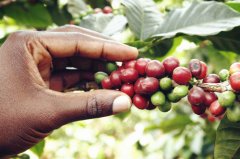
Ethiopian Coffee exports Fine Coffee
Coffee export coffee is Ethiopia's most important export cash crop and the main source of Ethiopia's foreign exchange earnings. Ethiopia's coffee exports account for about 3% of the world market, making it the eighth largest coffee exporter in the world. Coffee exports increased steadily from 58000 tons in 1990 to 110000 tons in 1995-1996 and remained at this level in the following years. two

Introduction to the Prospect of Coffee Industry in Brazil
Coffee is a traditional industry in Brazil. Since 1960, coffee cultivation in Brazil has been ranked first in the world, with an average annual output of 24.6 million bags (60 kg each). In 2002, due to favorable weather and a good year for coffee production, Brazilian coffee reached the best level in history, reaching 47.2 million bags, an increase of 59.6 per cent over 28.137 million bags in 2001. According to the November 2002 report of the United States Department of Agriculture,
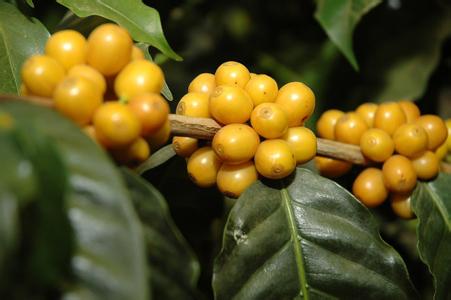
The world's largest coffee exporter is going to import coffee. What's going on?
Mention Brazil, samba, carnival and, of course, coffee. With its unique geographical location and natural conditions, coupled with hundreds of years of coffee cultivation history and traditional skills, Brazil has always occupied the top export position in the world coffee market. But now that things have changed, they are also thinking about importing coffee. The export volume of Brazilian coffee has always been difficult for other regions.

Export of Yerqin Coffee from Ethiopia Coffee Manor
In Ethiopia, the grading and quality control system of coffee is divided into three levels: producer, regional and national. All coffee is inspected by local inspection agencies before leaving the country of origin, and then re-tested at the coffee inspection and grading centers in Addis and Diredawa to determine its quality grade. Coffee is graded before auction and sale, for all involved in production, acquisition,
What are the coffee beans in Ethiopia's export single-product coffee market About African Coffee
Coffee is Ethiopia's most important export cash crop and the main source of foreign exchange earnings. Ethiopia's coffee exports account for about 3% of the world market share, making it the eighth largest coffee exporter in the world. Coffee exports increased steadily from 58,000 tons in 1990-1991 to 110,000 tons in 1995 - 1996 and remained at that level for the next few years. 2